
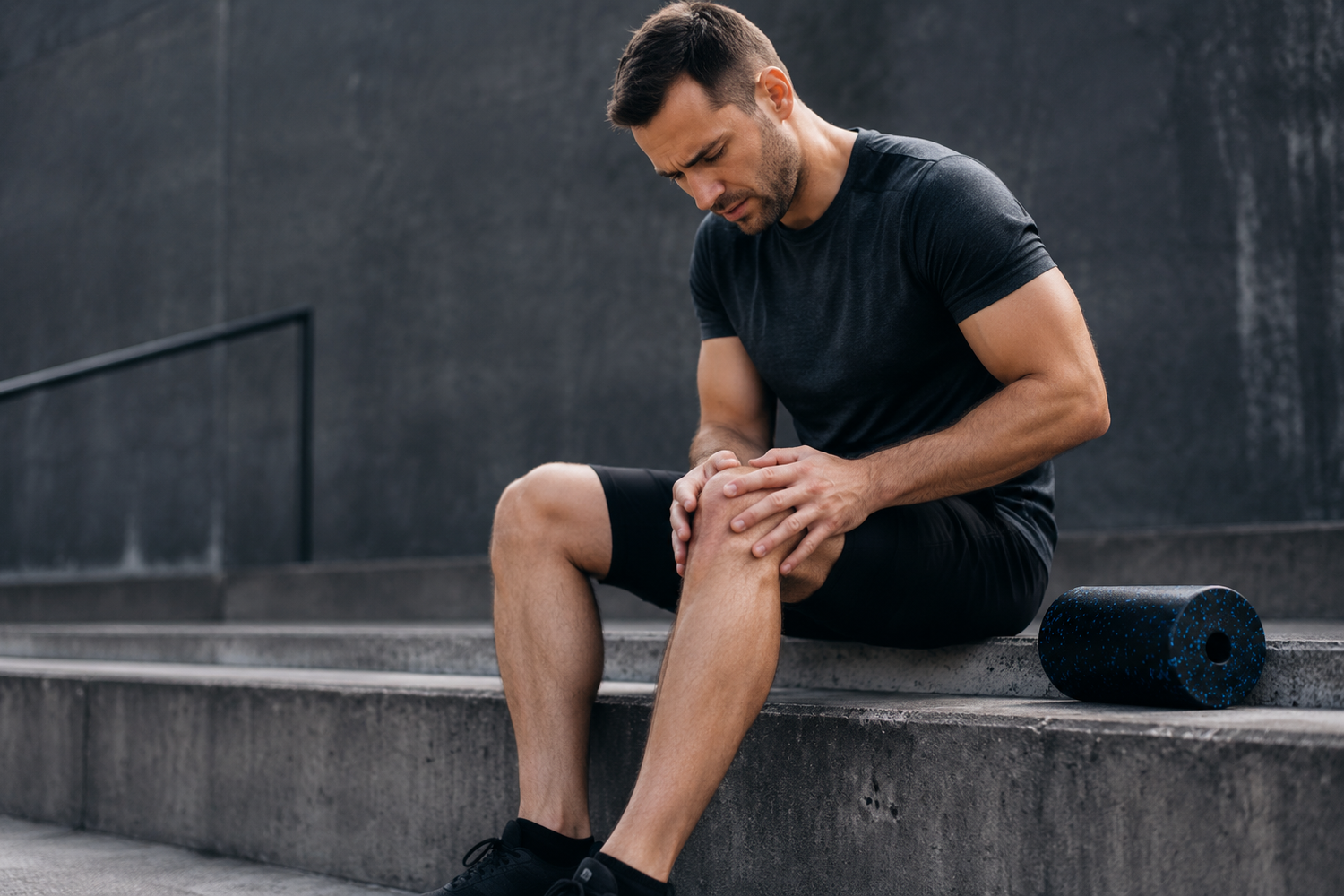
A sore knee can change far more than one workout. Stairs feel slower, sitting becomes uncomfortable and the next training session starts to feel uncertain. The difficult question is whether you are dealing with ordinary post-exercise soreness or a problem that deserves clinical attention.
No article can diagnose the cause of knee pain. What it can do is help you recognise patterns, avoid common mistakes and create a recovery routine that supports—rather than replaces—professional advice.
Why knees can feel sore after training
Running, squats, lunges, jumping and sudden changes of direction all load the knee and the muscles that control it. A new exercise, more volume than usual or a sharp increase in intensity can leave the surrounding tissues feeling tired or tender.
General muscle soreness is often felt on both sides, appears later and gradually settles. Pain that began with a twist, impact or sudden sharp sensation is different. So is pain accompanied by marked swelling, loss of movement or a feeling that the joint cannot be trusted.
Warning signs that should change your plan
According to NHS guidance, very severe pain, an inability to move or bear weight, major swelling, a changed shape, locking, giving way, or a hot red knee with fever are reasons to seek urgent advice. Continuing to train through those signs could aggravate the problem and delay the right assessment.
Even without an emergency sign, arrange medical or physiotherapy advice if pain keeps returning, affects sleep or normal activities, or fails to improve. A clear diagnosis matters more than finding a gadget that temporarily makes the area feel comfortable.
What to do in the first few days
For a new sprain or strain, NHS advice uses protection, rest, ice, compression and elevation during the first two to three days. Heat and massage are generally avoided at this stage because they may increase swelling. This is why a heat-based device should not be treated as first aid for an acute injury.
Once serious injury has been ruled out and movement is comfortable, gentle activity may help prevent unnecessary stiffness. The correct progression depends on the cause, so use pain and professional advice—not impatience—as your guide.
Build a routine before the next hard session
When you are cleared to resume activity, reduce the variables that caused the flare-up. Rebuild volume gradually, warm up, check technique and give harder sessions enough separation. Track how the knee feels during the session, later that day and the following morning.
A ten-minute recovery appointment can also make consistency easier: finish training, rehydrate, complete any prescribed mobility work and then use a comfort tool if it is appropriate for you. The routine is valuable because it removes guesswork.
Why this Phase One product was chosen
PhaseFlex is chosen here because it focuses the routine around the knee rather than treating recovery as a vague whole-body idea. Its warmth, pulse-style support and LED modes are intended for comfort and downtime after acute injury has been ruled out—not to diagnose, heal or rehabilitate a damaged joint.
Explore PhaseFlex™ Knee Recovery System — a wearable knee-focused system with adjustable warmth, pulse-style support and LED light modes for a calm, targeted comfort routine.
Visit Phase One Recovery to compare the full at-home recovery range.
Safety note
This article provides general educational information and is not medical advice. Phase One Recovery products are wellness and comfort devices; they do not diagnose, treat, cure or prevent injury or disease. Do not use a recovery device to delay assessment or mask symptoms before activity. Follow the product instructions and seek advice from a GP, physiotherapist, pharmacist or NHS 111 when symptoms are severe, worsening, unexplained or persistent. Call 999 for an emergency.

Leave a comment
This site is protected by hCaptcha and the hCaptcha Privacy Policy and Terms of Service apply.