
Lower back tension is one of the most common physical complaints among adults in the UK. Whether it builds up from long hours at a desk, extended driving, physical work, standing shifts or simply the accumulated strain of a busy daily routine, the lower back is one of the areas the body feels most by the end of the day.
The good news is that a consistent, practical home recovery routine can make a real difference to how your lower back feels — without clinic visits, complicated equipment or expensive treatments. This guide walks through why the lower back tires during daily routines, what supports recovery and how to build simple habits that fit around real life.
Why the Lower Back Can Feel Tired After Daily Routines
The lumbar spine — the lower section of the back — is one of the most load-bearing structures in the body. It supports the weight of the upper body during sitting, standing and movement, and is involved in almost every physical activity from walking and lifting to driving and desk work.
When the lower back is held in a sustained position for extended periods — particularly a seated or slightly forward-flexed posture — the surrounding muscles, ligaments and soft tissue can fatigue and tighten. This is especially common in people who:
- Sit at a desk or in front of a screen for most of the working day
- Drive for extended periods, particularly with a reclined or unsupported seat position
- Stand on hard flooring for long shifts without adequate footwear or mat support
- Perform repetitive lifting, bending or twisting movements at work
- Carry bags or equipment on one side of the body regularly
- Have a generally sedentary lifestyle with limited daily movement
According to the NHS, lower back problems are one of the leading causes of work-related absence in the UK, and most adults will experience lower back tension or discomfort at some point in their lives. In the majority of cases, simple lifestyle habits and a consistent recovery routine can support comfort and help the area feel more settled over time.
The Role of Posture, Movement and Rest
Three of the most important factors in lower back recovery are posture during daily activities, regular movement throughout the day and adequate rest. None of these needs to be complicated — but all three need to be consistent.
Posture
Sustained poor posture during desk work or driving is one of the most common contributors to lower back fatigue. A few practical adjustments can make a significant difference:
- Sit with your lower back supported — use a lumbar support cushion if your chair doesn't provide adequate support
- Keep your feet flat on the floor with your hips at roughly 90 degrees
- Position your screen at eye level to avoid hunching forward
- When driving, adjust your seat so your lower back is in contact with the seat back and your knees are slightly bent
Movement
The lower back responds well to regular, gentle movement. Prolonged static postures — whether sitting or standing — allow tension to build up in the surrounding muscles. Breaking up long periods of sitting with short movement breaks every 30 to 60 minutes is one of the most effective ways to reduce the accumulation of lower back tension during the working day.
A 2016 review published in Applied Ergonomics found that regular movement breaks during prolonged sitting were consistently associated with reduced musculoskeletal discomfort in the lower back region among office workers.
Rest
Quality sleep is one of the most important components of lower back recovery. The body repairs and recovers during sleep, and inadequate rest can contribute to increased feelings of tension and discomfort the following day. The NHS recommends 7 to 9 hours of sleep per night for adults, and sleeping in a supported position — on your side with a pillow between your knees, or on your back with a pillow under your knees — can help reduce strain on the lower back during sleep.
How Targeted Warmth Can Support Relaxation
Heat therapy is one of the most widely used home recovery tools for the lower back. Applied to the lumbar area, gentle warmth can help the surrounding muscles feel more relaxed and at ease — making it a practical and popular addition to an evening recovery routine.
A 2006 review published in Spine journal examined the use of heat wraps for lower back comfort and found that continuous low-level heat application was associated with reduced feelings of tension and improved comfort in the lumbar region compared to no treatment. Heat is generally considered most useful after the working day has ended, as part of a wind-down routine rather than during active work or immediately after acute strain.
Many people find that a 20 to 30 minute heat session on the lower back in the evening — while sitting comfortably or lying down — helps the area feel significantly more relaxed before sleep.
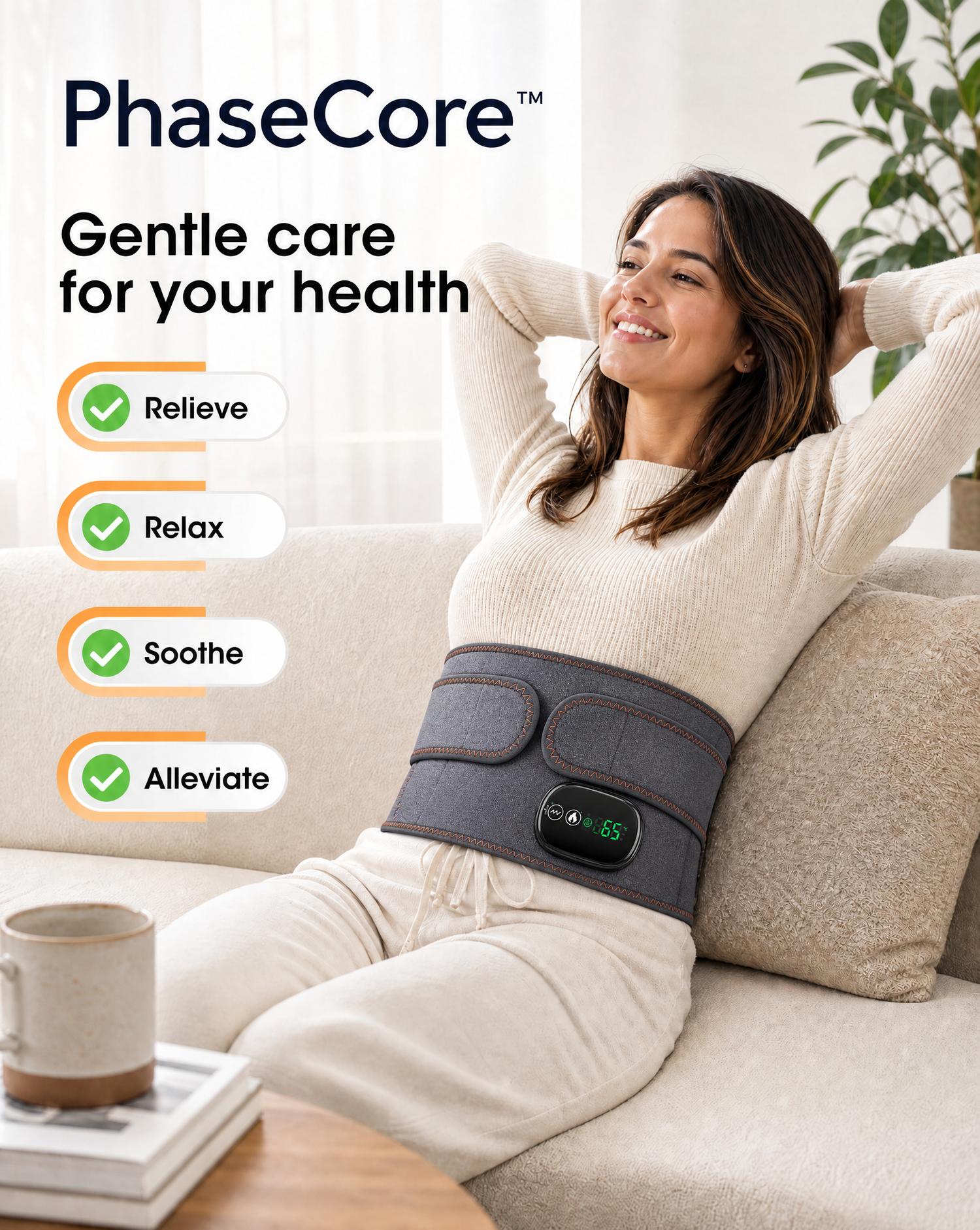
The PhaseCore™ Heated Lumbar Recovery Belt from Phase One Recovery is a wearable heat support belt designed to wrap around the lower back and deliver consistent, targeted warmth to the lumbar area as part of a home recovery routine. Adjustable, rechargeable and wireless, it's designed to be worn hands-free at home — while resting, watching TV or winding down after a long day.
Explore the PhaseCore™ Heated Lumbar Recovery Belt →
Building an Evening Recovery Habit
The most effective lower back recovery routines are built on consistency rather than intensity. A short, intentional evening routine — applied regularly — will generally deliver more benefit than occasional longer sessions.
A simple evening lower back recovery routine might look like this:
- Gentle movement or stretching (5–10 minutes) — A few gentle lower back stretches — such as a supine knee-to-chest stretch, a cat-cow movement or a seated forward fold — can help ease the feeling of tightness that builds up during the day.
- Heat session (20–30 minutes) — Apply a wearable heat wrap or heated belt to the lower back while sitting or lying in a comfortable position. Use this time to rest, read or simply decompress from the day.
- Supported rest position — After your heat session, rest in a position that supports the lower back — on your side with a pillow between your knees, or on your back with a pillow under your knees.
- Reduce screen time — Continued screen use in the evening keeps the body in the same forward posture it's been in all day. Reducing screen time in the hour before bed supports both lower back recovery and sleep quality.
Building this routine into your evenings three to five times per week — rather than only on days when your back feels particularly tired — is the most effective approach.
Mistakes to Avoid
A few common habits can work against lower back recovery, even when people are trying to do the right thing:
- Complete rest for extended periods — While rest is important, prolonged bed rest or complete inactivity is generally not recommended for lower back tension. Gentle movement is usually more beneficial than staying still. The NHS advises staying as active as possible and avoiding prolonged bed rest.
- Sitting for too long without breaks — Even with good posture, sitting for hours without movement allows tension to build. Set a timer to stand up and move every 30 to 60 minutes.
- Using heat immediately after acute strain — If the lower back has been acutely strained, applying heat immediately may not be appropriate. In the first 24 to 48 hours after an acute strain, cold may be more suitable. Always follow the guidance of a healthcare professional in these situations.
- Inconsistent recovery habits — Doing a recovery session once a week when the back feels bad, rather than building a consistent routine, limits the long-term benefit. Consistency is the most important factor.
- Ignoring persistent symptoms — Lower back tension that persists, worsens or is accompanied by other symptoms should always be assessed by a healthcare professional. Home recovery tools are not a substitute for medical advice.
Safety and Responsible Use
Wearable heat systems for the lower back are widely used and generally well-tolerated for healthy adults. Follow these guidelines for safe use:
- Do not use while sleeping. Always use heat systems while awake and able to monitor your comfort level.
- Do not apply to broken, irritated or sensitive skin. Ensure the skin is healthy and intact before use.
- Start on a lower heat setting and adjust gradually to find a comfortable level.
- Follow the recommended session times provided with your device — typically 20 to 30 minutes per session.
- Stop use immediately if you experience any discomfort, burning sensation or unusual skin reaction.
- Consult a healthcare professional before use if you are pregnant, diabetic, fitted with a pacemaker or medical implant, recovering from surgery or managing a serious health condition.
The PhaseCore™ Heated Lumbar Recovery Belt is a general wellness and comfort tool. It is not a medical device and is not intended to diagnose, treat or replace professional medical advice or care.
How the PhaseCore™ Lumbar Recovery System Fits Into a Home Routine
The PhaseCore™ Heated Lumbar Recovery Belt is designed to make targeted lower back heat support as simple and practical as possible. Rather than using a plug-in heat pad that keeps you tethered to a socket, the PhaseCore™ is wireless and rechargeable — so you can wear it while moving around the house, sitting in your preferred chair or lying down during a recovery session.
Key features of the PhaseCore™ system:
- Targeted lumbar heat — Designed to wrap around the lower back and deliver consistent warmth directly to the lumbar area
- Adjustable heat settings — Multiple levels so you can personalise the warmth to your comfort preference
- Wireless and rechargeable — No cables during use, so you can wear it freely at home
- Wearable and hands-free — Designed to be worn during rest, not just while lying still
- Simple home use — No professional setup required. Wrap it on, select your setting and relax
Whether you use it as part of an evening wind-down, a rest-day recovery session or a post-work decompression routine, the PhaseCore™ is built to support your lower back comfort and fit around real life.
Shop the PhaseCore™ Heated Lumbar Recovery Belt →
Explore All Phase One Recovery Systems →
References
The following sources were used to inform the general context of this article. This article does not make medical claims and is intended for general wellness and informational purposes only.
- Nadler, S. F., Steiner, D. J., Erasala, G. N., Hengehold, D. A., Hinkle, R. T., Beth Goodale, M., ... & Weingand, K. W. (2002). Continuous low-level heat wrap therapy provides more efficacy than ibuprofen and acetaminophen for acute low back pain. Spine, 27(10), 1012–1017. https://doi.org/10.1097/00007632-200205150-00003
- Hayden, J. A., van Tulder, M. W., Malmivaara, A., & Koes, B. W. (2005). Exercise therapy for treatment of non-specific low back pain. Cochrane Database of Systematic Reviews, 3, CD000335. https://doi.org/10.1002/14651858.CD000335.pub2
- Coenen, P., Willenberg, L., Parry, S., Shi, J. W., Romero, L., Blackwood, D. M., ... & Straker, L. M. (2016). Associations of occupational standing with musculoskeletal symptoms: A systematic review with meta-analysis. British Journal of Sports Medicine, 51(7), 1. https://doi.org/10.1136/bjsports-2016-096795
- NHS. (2023). Back pain. NHS. Retrieved from https://www.nhs.uk/conditions/back-pain/
- Mayo Clinic. (2023). Back pain: Symptoms and causes. Mayo Clinic. Retrieved from https://www.mayoclinic.org/diseases-conditions/back-pain/symptoms-causes/syc-20369906
- Harvard Health Publishing. (2021). The importance of stretching. Harvard Medical School. Retrieved from https://www.health.harvard.edu/staying-healthy/the-importance-of-stretching
Phase One Recovery products are general wellness tools and are not medical devices. Always consult a qualified healthcare professional before beginning any new recovery routine, particularly if you have an existing health condition, have experienced a back injury or are managing a diagnosed spinal condition.

Leave a comment
This site is protected by hCaptcha and the hCaptcha Privacy Policy and Terms of Service apply.