
Whether you run, play football, train at the gym, walk long distances or simply stay active as part of your daily routine, your knees do a significant amount of work. It's no surprise that they're one of the most commonly fatigued areas of the body after activity — and one of the areas people most want to support as part of a consistent recovery routine.
This guide is for active people who want to build better knee recovery habits. We'll cover why knees can feel tired after activity, what a practical recovery routine looks like, and how wearable knee recovery systems can support your comfort between sessions.
Why Knees Can Feel Tired After Activity
The knee is one of the most complex joints in the body. It bears a significant proportion of your body weight during movement and is involved in almost every lower-body activity — running, jumping, squatting, climbing stairs, walking and standing.
After sustained activity, the muscles, tendons and soft tissue surrounding the knee can feel fatigued, tight or heavy. This is a normal response to physical exertion. The quadriceps, hamstrings, calves and IT band all attach near or around the knee, and tension in any of these structures can contribute to the feeling of stiffness or discomfort in the area after training.
Common activities that can leave the knees feeling fatigued include:
- Running and endurance sports, particularly on hard surfaces
- Football, rugby and other field sports involving repeated changes of direction
- Strength training, particularly squats, lunges and leg press movements
- Long walks or hikes, especially on uneven terrain
- Extended periods of standing on hard flooring
- Cycling, particularly with incorrect saddle height or bike fit
Understanding why the knee feels tired after activity is the first step towards building a recovery routine that actually supports it.
The Role of Rest and Recovery Routines
Rest is one of the most undervalued components of any training programme. The body adapts and recovers during rest periods — not during the training session itself. For the knee specifically, adequate rest between sessions allows the surrounding muscles and soft tissue to recover from the demands placed on them during activity.
A 2018 systematic review published in Frontiers in Physiology highlighted that structured recovery strategies — including rest, compression and heat — are consistently associated with reduced feelings of fatigue and improved readiness for subsequent training sessions when applied as part of a regular routine.
Building rest days into your training schedule and using that time for active recovery — gentle movement, targeted warmth and compression-style support — is one of the most practical ways to support your knees over the long term.
Gentle Movement and Mobility Habits
Complete rest is not always the most effective approach to recovery. Gentle, low-impact movement on rest days can help keep the surrounding muscles and tissue feeling mobile and comfortable without placing additional stress on the joint.
Mobility habits that many active people incorporate into their knee recovery routines include:
- Gentle walking — A short, easy walk on a rest day can help the legs feel less stiff without adding significant load to the knee.
- Quad and hamstring stretching — Gentle stretching of the muscles above and below the knee can help ease the feeling of tightness in the surrounding area.
- Foam rolling — Light foam rolling of the quadriceps, IT band and calves can help the tissue feel more relaxed and mobile.
- Low-impact movement — Swimming, cycling at low resistance or yoga can support general mobility without placing high demands on the knee.
- Bodyweight exercises — Gentle, controlled movements such as leg raises or seated knee extensions can help maintain strength in the supporting muscles without overloading the joint.
The key is to keep movement gentle and intentional on recovery days — not to push through fatigue or add additional training load.
Using Targeted Warmth as Part of Recovery
Heat therapy is one of the most widely used tools in home recovery routines, particularly for areas that feel stiff or tight after activity. Applied to the knee area, gentle warmth can help the surrounding muscles and tissue feel more relaxed and at ease — making it a popular addition to rest-day and post-training recovery routines.
Heat is generally considered most useful after the initial post-exercise period has passed — typically from the following day onwards, or as part of an evening wind-down routine after a training day. Many active people find that a short heat session on the knee area helps them feel more comfortable and settled before sleep or before their next training session.
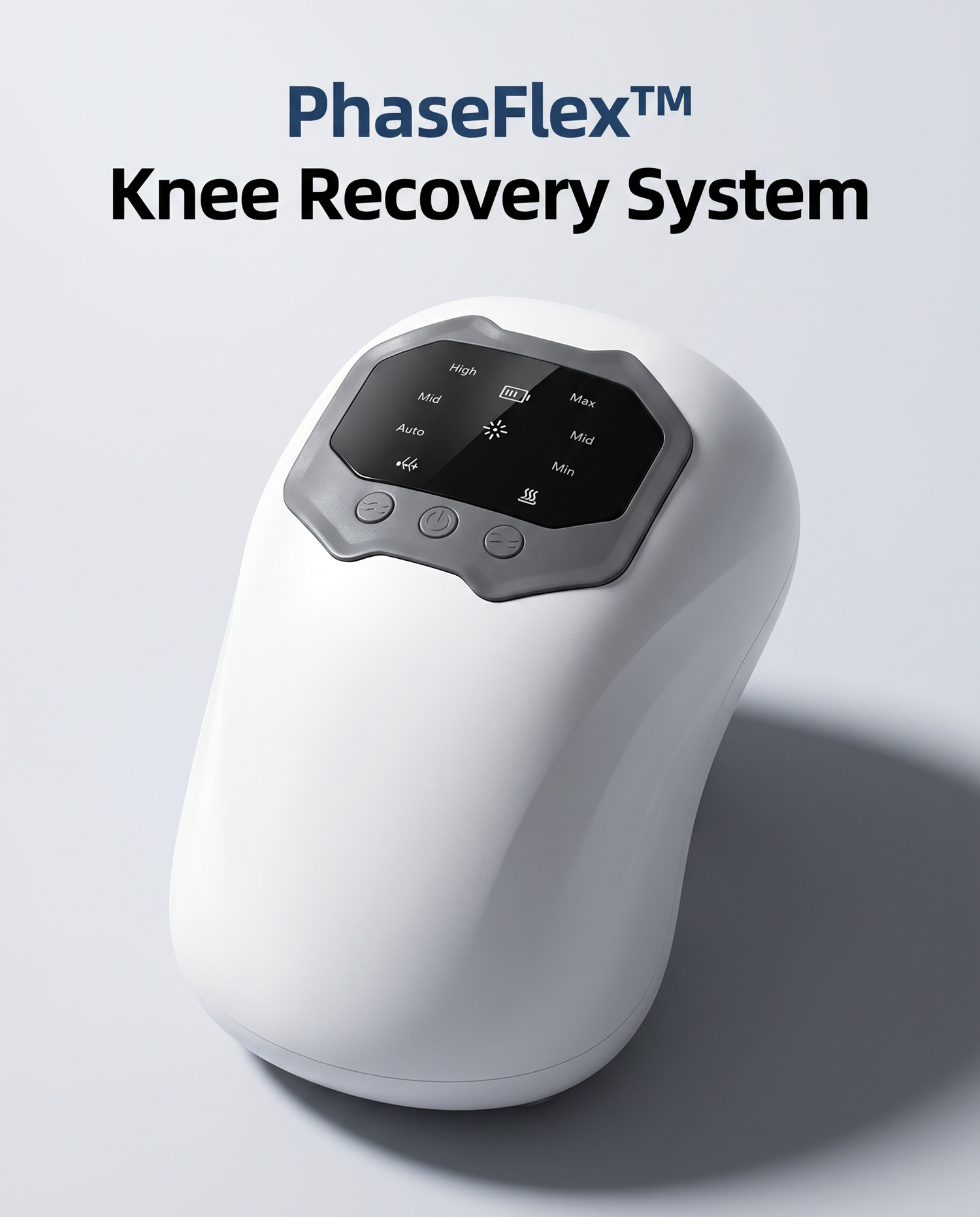
The PhaseFlex™ Knee Recovery System from Phase One Recovery is a wearable, targeted heat wrap designed specifically for the knee area. It delivers consistent, adjustable warmth directly around the knee joint, making it easy to incorporate into a home recovery routine without any professional setup. Wireless and rechargeable, it's designed to be used at home — during rest, while watching TV or as part of a structured recovery session.
Explore the PhaseFlex™ Knee Recovery System →
Hydration, Sleep and Consistency
Recovery is not just about what you do in the hour after training. The foundations of good recovery are built over time through consistent habits — and three of the most important are hydration, sleep and routine.
Hydration
Adequate hydration supports the body's general function and helps maintain the health of the soft tissue and cartilage surrounding the knee. The NHS recommends drinking approximately 6 to 8 glasses of fluid per day, with additional intake required during and after exercise to replace fluids lost through sweat.
Sleep
Sleep is when the body does the majority of its recovery work. Research consistently shows that inadequate sleep is associated with slower recovery, increased feelings of fatigue and reduced physical performance. A 2021 review in the International Journal of Sports Medicine highlighted sleep as one of the most important and most overlooked components of athletic recovery. Aiming for 7 to 9 hours of quality sleep per night is a widely recommended target for active adults.
Consistency
Perhaps the most important factor in any recovery routine is consistency. A short, regular recovery session — whether that's a 20-minute heat wrap, a gentle stretch or a compression session — applied consistently over weeks and months will generally deliver more benefit than occasional longer sessions. Building recovery habits into your daily routine, rather than treating them as an afterthought, is the most effective long-term approach.
How Wearable Knee Recovery Systems Can Support a Routine
Wearable recovery systems have made it significantly easier to build consistent recovery habits at home. Rather than booking clinic appointments or investing in expensive professional treatments, many active people now use portable, wireless recovery tools as part of their everyday routine.
For the knee specifically, a wearable heat wrap offers several practical advantages:
- Targeted support — Warmth is delivered directly to the knee area rather than to the whole body, making it a focused and efficient recovery tool.
- Hands-free use — You can wear a knee recovery wrap while resting, reading or watching TV, making it easy to fit into a busy schedule.
- Adjustable settings — Most wearable systems offer multiple heat levels, so you can personalise the experience to your comfort preference.
- Portable and wireless — Rechargeable systems can be used anywhere at home without being tethered to a power socket.
- Consistent routine support — Having a dedicated recovery tool makes it easier to build and maintain a regular recovery habit.
The PhaseFlex™ Knee Recovery System is designed with all of these principles in mind — a clean, wearable heat wrap built for active people who want a practical, consistent knee recovery tool at home.
When to Seek Medical Advice
While tired, stiff or fatigued knees after activity are common and generally manageable with a good recovery routine, there are situations where it's important to seek professional medical advice rather than relying on home recovery tools alone.
You should consult a qualified healthcare professional or GP if you experience:
- Sudden or severe knee discomfort that does not ease with rest
- Visible swelling, redness or warmth around the knee joint
- A feeling of instability, locking or giving way in the knee
- Discomfort that persists for more than a few days after activity
- Any knee symptoms following a fall, collision or acute injury
- Symptoms that are getting progressively worse over time
Home recovery tools — including heat wraps and compression systems — are general wellness and comfort tools. They are not medical devices and are not a substitute for professional medical assessment or treatment.
The NHS provides guidance on knee conditions and when to seek medical attention at nhs.uk/conditions/knee-pain.
Build Your Knee Recovery Routine
Consistent knee recovery doesn't need to be complicated. Rest, gentle movement, targeted warmth, good hydration and quality sleep — applied regularly and with intention — are the foundations of a practical recovery routine that supports your knees over the long term.
If you're looking for a wearable heat system to support your knee recovery routine at home, explore the PhaseFlex™ Knee Recovery System and the full Phase One Recovery lower-body range.
Shop the PhaseFlex™ Knee Recovery System →
Explore All Phase One Recovery Systems →
References
The following sources were used to inform the general context of this article. This article does not make medical claims and is intended for general wellness and informational purposes only.
- Dupuy, O., Douzi, W., Theurot, D., Bosquet, L., & Dugué, B. (2018). An Evidence-Based Approach for Choosing Post-exercise Recovery Techniques to Reduce Markers of Muscle Damage, Soreness, Fatigue, and Inflammation: A Systematic Review With Meta-Analysis. Frontiers in Physiology, 9, 403. https://doi.org/10.3389/fphys.2018.00403
- Watson, A. M. (2017). Sleep and Athletic Performance. Current Sports Medicine Reports, 16(6), 413–418. https://doi.org/10.1249/JSR.0000000000000418
- Kellmann, M., Bertollo, M., Bosquet, L., Brink, M., Coutts, A. J., Duffield, R., ... & Beckmann, J. (2018). Recovery and Performance in Sport: Consensus Statement. International Journal of Sports Physiology and Performance, 13(2), 240–245. https://doi.org/10.1123/ijspp.2017-0759
- NHS. (2023). Knee pain. NHS. Retrieved from https://www.nhs.uk/conditions/knee-pain/
- Mayo Clinic. (2023). Knee pain: Symptoms and causes. Mayo Clinic. Retrieved from https://www.mayoclinic.org/diseases-conditions/knee-pain/symptoms-causes/syc-20350849
- NHS. (2023). Water, drinks and hydration. NHS. Retrieved from https://www.nhs.uk/live-well/eat-well/food-guidelines-and-food-labels/water-drinks-nutrition/
Phase One Recovery products are general wellness tools and are not medical devices. Always consult a qualified healthcare professional before beginning any new recovery routine, particularly if you have an existing health condition or have experienced a knee injury.

Leave a comment
This site is protected by hCaptcha and the hCaptcha Privacy Policy and Terms of Service apply.