
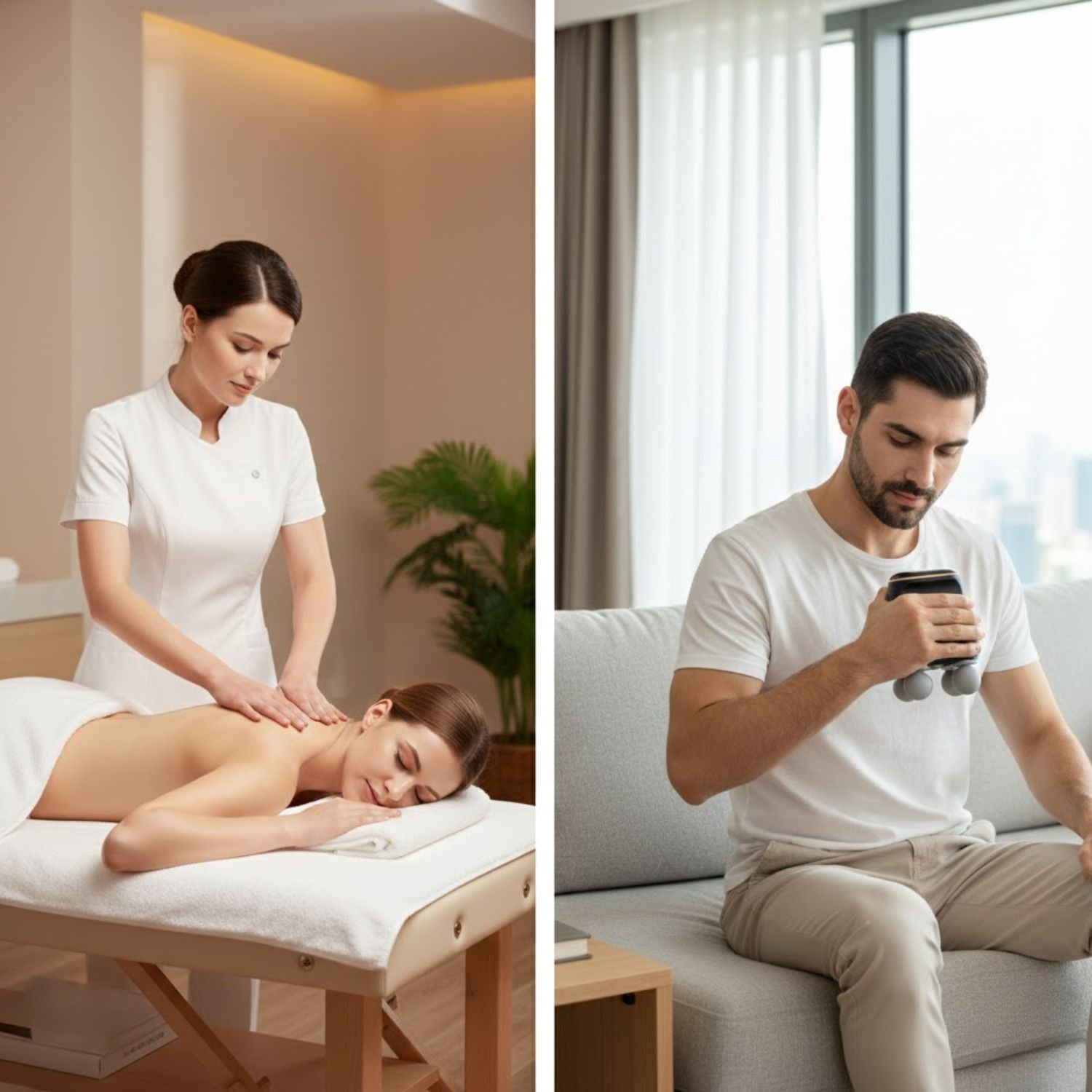
Let’s be honest—most of us love the idea of a proper massage. The calm room, the skilled hands, the feeling of tension melting away. Lovely stuff. But in real life? Booking sessions, finding time, and keeping up the cost isn’t always realistic.
That’s where the massage gun conversation comes in. And yes, it’s worth having.
Traditional massage works brilliantly for relaxation, circulation, and overall wellbeing. A trained therapist can read your body, adjust pressure, and work intuitively. If you’ve got the time and budget, it’s a solid option.
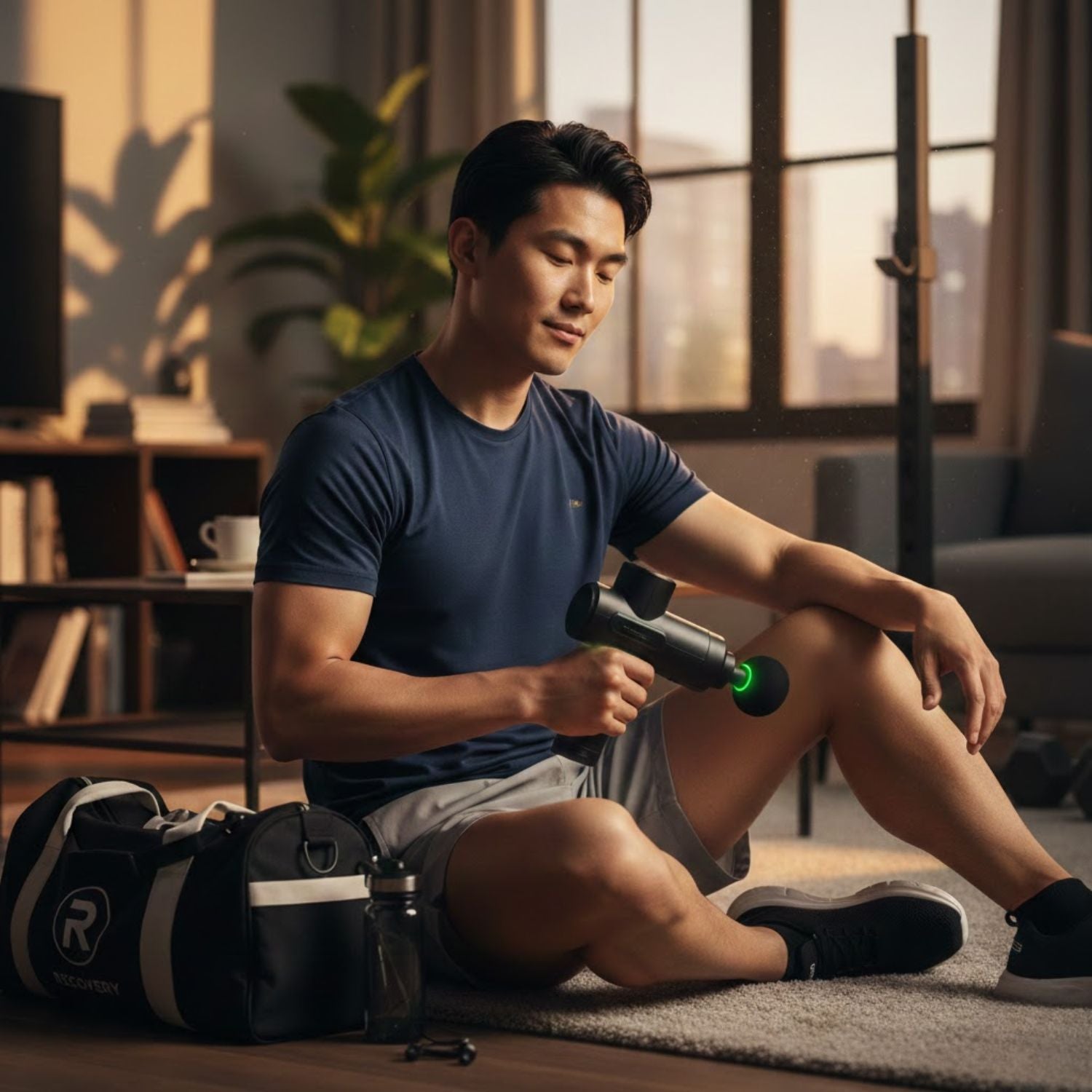
Massage guns, on the other hand, are built for consistency and convenience. They deliver rapid percussive therapy straight into muscle tissue, helping to reduce tightness, stimulate blood flow, and speed up recovery—without you needing to leave the house.
The real difference isn’t about which is “better”, but how and when you use them.
Massage guns shine when you need quick relief after a workout, during a busy workweek, or when that familiar shoulder tightness creeps in after hours at your desk. Long-handle designs and adjustable intensity levels make it easy to reach awkward spots like the upper back or glutes—areas that tend to hold onto stress for dear life.
Traditional massage, meanwhile, is more about the full experience. It’s brilliant for deep relaxation and longer sessions, but less practical for daily upkeep.
In an ideal world? You’d mix both. But if we’re being realistic (and a bit British about it), having an effective recovery tool at home means you’re far more likely to actually use it. And consistency, as always, is where the magic happens.
The takeaway is simple: what works best is what fits into your life. If recovery becomes easy, accessible, and part of your routine, your body will thank you—probably the very next morning.

Leave a comment
This site is protected by hCaptcha and the hCaptcha Privacy Policy and Terms of Service apply.