

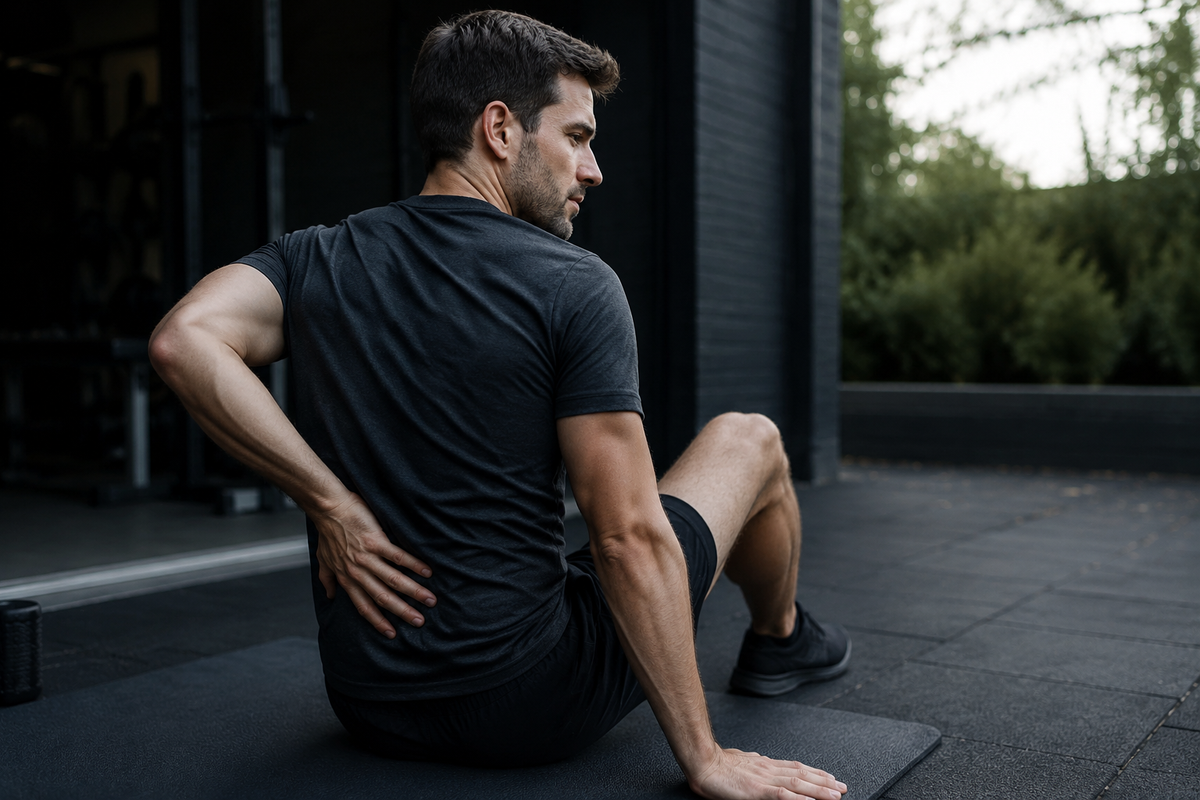
After a day at a desk, the lower back can feel as though it has forgotten how to stand. That stiffness may affect the walk home, the gym session and even confidence about bending or lifting.
Back pain is common and often improves, but it has many possible causes. Staying active is generally encouraged for uncomplicated back pain, while certain symptoms require urgent assessment.
Break up stillness before it becomes the evening problem
Change position regularly rather than waiting until discomfort is intense. Short walks, standing tasks and comfortable movement can be easier to maintain than one long mobility session at the end of the day.
Adjust the chair, screen and keyboard so the setup supports rather than pins you. No posture needs to be held perfectly; variety is the practical target.
Avoid the bed-rest trap
NHS advice for ordinary back pain encourages staying active and avoiding long periods in bed. Complete daily tasks within tolerance and build movement gradually.
Stop an exercise if pain becomes worse and seek advice. Generic stretches are not appropriate for every cause, especially after trauma or when nerve symptoms are present.
Know the urgent red flags
Call emergency services for back pain with loss of feeling around the genitals or anus, bladder or bowel changes, weakness or numbness in both legs, chest pain, or pain after a serious accident. Seek urgent advice if you feel generally unwell, have fever or the pain is severe and rapidly worsening.
These symptoms should never be covered up with heat, massage or a wearable device.
Use warmth as comfort, not proof of recovery
Gentle warmth may ease stiffness or muscle spasm for some people. It should not feel hot, the skin must be checked and it is not suitable over a new swollen injury or where sensation is reduced.
If warmth makes movement feel easier, follow it with comfortable, appropriate activity rather than assuming the underlying issue has disappeared.
Why this Phase One product was chosen
PhaseCore is relevant because its wearable format brings targeted warmth and pulse-style support to a planned lower-back comfort routine. It does not treat disc problems, nerve pain or injury, and it should never delay assessment of red-flag symptoms.
Explore PhaseCore™ Lumbar Recovery System - a wearable lumbar system offering targeted warmth, pulse-style support and LED light modes for lower-back comfort routines.
Visit Phase One Recovery to compare the full at-home recovery range.
Safety note
This article provides general educational information and is not medical advice. Phase One Recovery products are wellness and comfort devices; they do not diagnose, treat, cure or prevent injury or disease. Do not use a recovery device to delay assessment or mask symptoms before activity. Follow the product instructions and seek advice from a GP, physiotherapist, pharmacist or NHS 111 when symptoms are severe, worsening, unexplained or persistent. Call 999 for an emergency.

Leave a comment
This site is protected by hCaptcha and the hCaptcha Privacy Policy and Terms of Service apply.